
SEO isn’t the same anymore. AI flipped the script.
Search is no longer just about keywords, backlinks, and technical fixes. It’s about machines that understand context, user intent, and language better than ever before. At the heart of that change is AI.
Artificial intelligence has moved from a “nice-to-have” to a must-have in every SEO strategy. What used to take days from keyword research to content optimization, now happens in minutes. Marketers are building smarter content, running deeper audits, and automating complex workflows without ever writing a single line of code.
The numbers back it up, where 75% of marketers now use AI for SEO tasks.
That’s not a trend, that’s a transformation.
How AI Flipped the SEO Playbook
Let’s be honest, SEO used to be predictable.
Find the keywords.
- Optimize the page.
- Build the links.
- Repeat.
But search engines and users have changed. Google isn’t just reading words anymore. It’s interpreting meaning, understanding queries, and delivering answers instantly. With the rise of LLM-powered search tools like ChatGPT, Gemini, and Perplexity, users don’t even need to “search” traditionally. They just ask and get results.
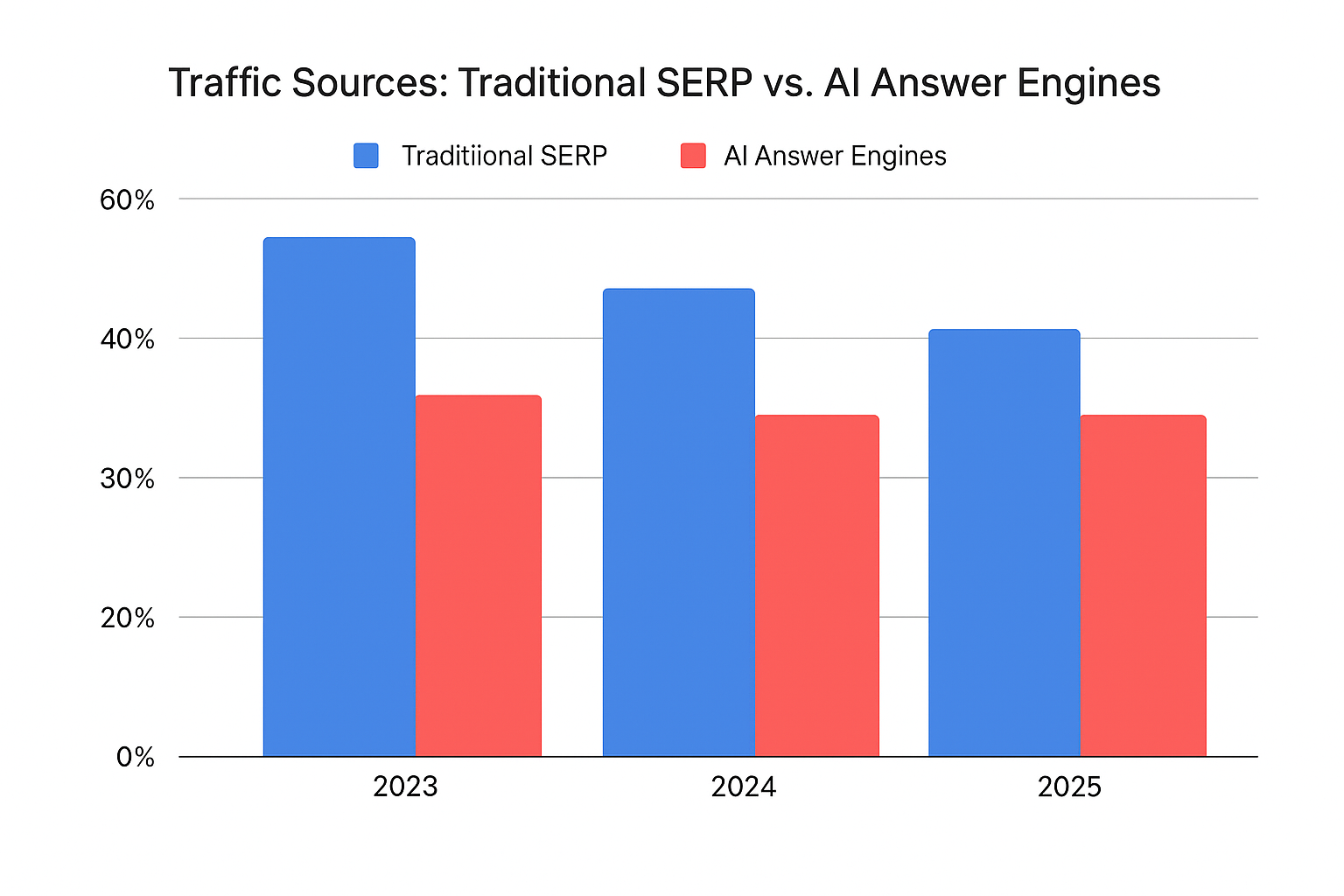
This shift means that visibility isn’t limited to the SERP anymore. You also need to show up in AI-powered answer engines. That’s where new AI SEO tools come in helping brands optimize not just for Google, but for the future of discovery.
The Power of Automation and Scale
AI isn’t just changing where we optimize. It’s changing how fast we do it.
Tasks that once required entire SEO teams. Keyword clustering, competitor analysis, and internal link mapping are now automated. Tools powered by machine learning may analyze millions of data points in seconds and recommend changes that would have taken humans weeks to uncover.
58% of top-performing content marketers say AI tools have doubled their output without adding new staff.
That’s huge. Because in SEO, speed and scale are everything.
Content Optimization Has Become Smarter
Content is still king. But the way we create and optimize it is smarter than ever.
AI now identifies semantic gaps, suggests entities, and analyzes SERP intent, all before you write a single word. Some tools even write optimized drafts, complete with headings, structure, and schema suggestions.
The result is better content, faster, and built to rank.
Adapt or Fall Behind
The takeaway is simple, AI is no longer optional in SEO.
It’s the difference between staying visible or disappearing. It’s how small teams compete with giant agencies. It’s how brands dominate search not just on Google, but across every AI-driven platform users turn to.
The future of SEO is here, and it’s powered by AI.
1. Rank Prompt – Optimize for the Age of AI Search
Traditional SEO tools tell you how you’re ranking on Google. But Rank Prompt goes one step further, it tells you how visible you are in AI-powered search engines like ChatGPT, Google Gemini, and Perplexity.
In 2025, that’s a big deal. As more people use LLM-based platforms to find answers, showing up in those answers may bring massive traffic, even if your site isn’t #1 on Google.
Key Features
- AI visibility tracking – measure how often your brand is cited in ChatGPT, Gemini, and other LLM outputs.
- Prompt-based SEO insights – discover which prompts trigger your content, and how to optimize for them.
- Competitor AI footprint analysis – see where competitors rank inside AI answers.
- SERP + SEO analytics: Combine traditional SEO data with Answer Engine Optimization (AEO) performance.
Who It’s Best For
- Brands focused on Answer Engine Optimization (AEO).
- Agencies managing enterprise-level SEO strategies
- Publishers aiming for AI-driven traffic.
Pros
- Unique focus on AI search visibility.
- Competitive insights beyond SERP.
- Forward-looking SEO intelligence.
Cons
- Still new limited integrations with legacy tools.
- Requires a learning curve for non-technical users.
Real-World Use Case
A B2B SaaS company optimized content based on Rank Prompt’s “prompt visibility” recommendations and saw a 42% increase in traffic from AI search assistants within three months.
Performance Stat
- 57% of users now prefer AI chat results over traditional SERPs.
Use Rank Prompt’s “prompt triggers” feature to rewrite intros and meta descriptions. This increases your odds of being cited in LLM answers.
2. Surfer AI – Smarter Content That Ranks Faster
Surfer AI is one of the most powerful AI-driven content optimization tools on the market. It takes the guesswork out of SEO writing by analyzing top-performing pages and generating content guidelines, keyword suggestions, and real-time optimization scores.
It’s designed for marketers who want to publish content that ranks without needing to be SEO experts.
Key Features
- AI-powered content scoring based on SERP data.
- NLP-based keyword and topic recommendations.
- Content structure and readability analysis.
- Built-in audit tool for existing pages.
- Integration with WordPress, Google Docs, and Jasper AI.
Who It’s Best For
- Content marketers and SEO writers.
- Agencies scaling blog production.
- E-commerce brands building content hubs.
Pros
- Real-time content optimization during writing.
- Improves topical authority and semantic depth.
- User-friendly for beginners.
Cons
- AI-generated text may still require manual editing.
- Advanced features available only on higher-tier plans.
Performance Stat
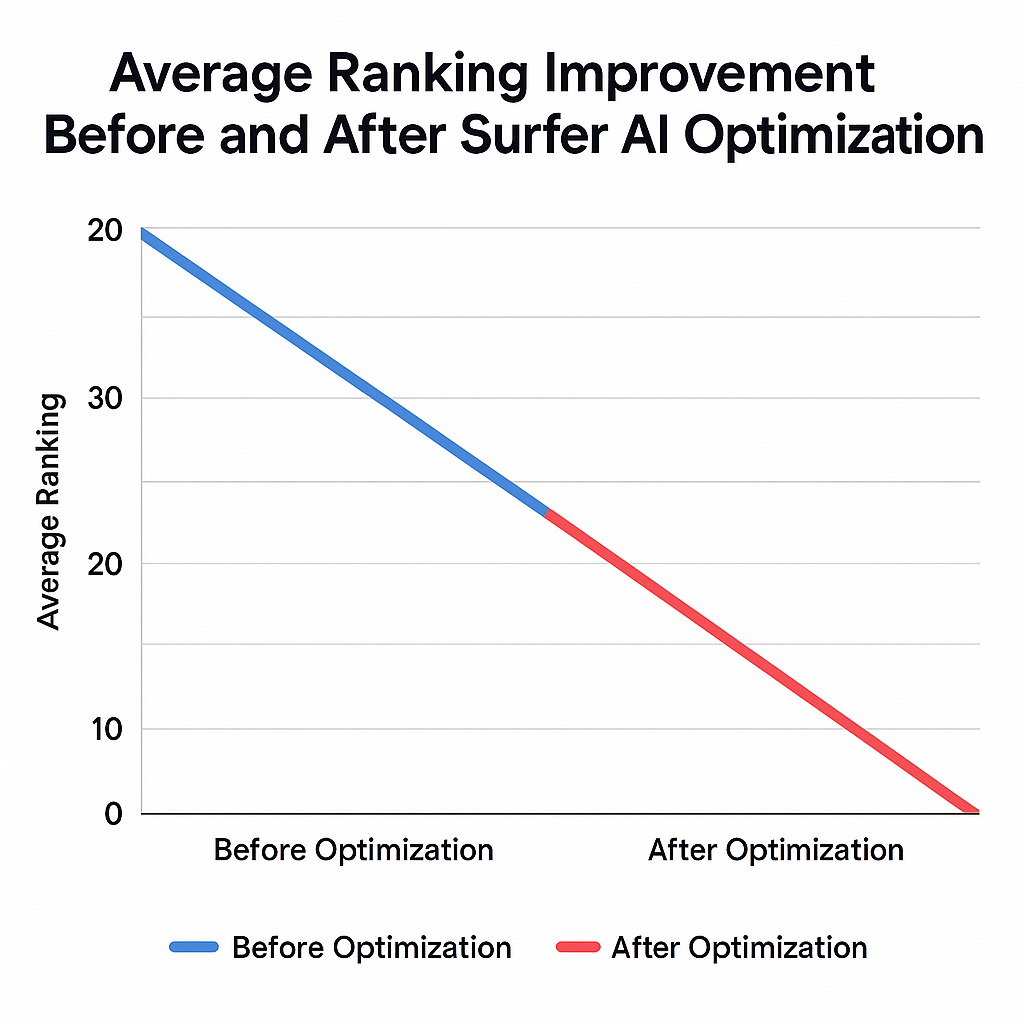
- 70% of Surfer users report ranking on page one within three months of using the tool (Surfer Case Studies, 2025).
Real-World Use Case
An affiliate site used Surfer AI to re-optimize 50 existing articles. Within 90 days, they saw a 68% increase in organic traffic and 35% higher click-through rates.
3. Clearscope – Data-Driven Content That Dominates Search
Clearscope is a premium SEO content optimization tool trusted by leading brands, agencies, and publishers. Its core strength lies in NLP-driven topic analysis, helping you write content that matches search intent, covers semantic entities, and ranks higher.
What sets Clearscope apart in 2025 is its depth of analysis. It doesn’t just suggest keywords, it analyzes the top 30+ ranking pages for any keyword and reveals exactly what makes them successful. For serious content teams, that’s gold.

Key Features
- Keyword and topic intelligence – see semantic terms and entities competitors use to rank.
- Content grading – real-time content score based on readability, depth, and relevance.
- Competitor analysis – compare your draft against top-ranking pages.
- Search intent mapping – understand and align with what Google really wants.
- Integrations – works with Google Docs, WordPress, Notion, and more.
Who It’s Best For
- Enterprise content teams focused on search intent and authority.
- SEO agencies optimizing for high-competition keywords.
- Publishers and SaaS brands scaling long-form content.
Pros
- Extremely accurate content grading system.
- Boosts topical authority and semantic relevance.
- Seamless integration with existing workflows.
Cons
- Pricing is better suited for established teams.
- Slightly steeper learning curve for beginners.
Real-World Use Case
A global fintech company used Clearscope to overhaul their blog content. Within six months, they achieved a 92% increase in organic traffic and secured 42 new top-3 keyword positions, without publishing a single new article, all by re-optimizing existing content.
Performance Stat
- 81% of Clearscope users report higher rankings within 90 days of optimization.
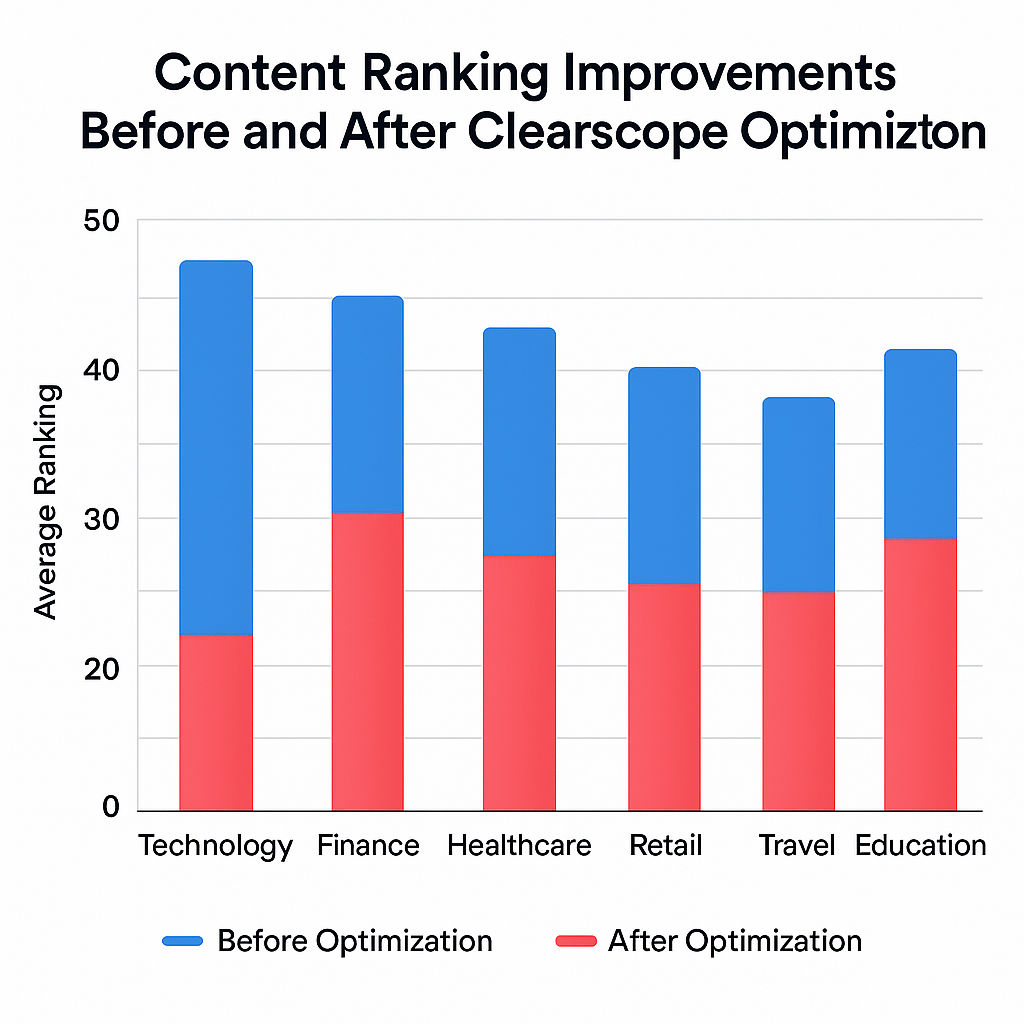
Use Clearscope’s “Content Grade” as a baseline. Aim for a grade of A+ before publishing content that meets or exceeds this benchmark consistently outperforms lower-grade content in SERPs.
4. Frase -The AI Research Assistant for Smarter SEO Content
Frase is an AI-powered SEO platform that combines content research, SERP analysis, and optimization into one streamlined workflow. It’s particularly powerful for teams that want to produce search-ready content fast without manually combing through dozens of competitor pages.
Frase doesn’t just generate topic ideas. It analyzes search results in real time, builds optimized content briefs, and even drafts content using its built-in AI writer all tailored to the target keyword and intent.
Key Features
- SERP research automation – instantly pulls insights from top-ranking pages.
- AI-powered briefs – auto-generates outlines, headings, and talking points.
- AI content writer – drafts optimized articles ready for editing.
- Content gap analysis – identify missing topics and keywords competitors rank for.
- Real-time optimization – receive instant suggestions as you write.
Who It’s Best For
- Content marketers and freelancers need fast turnaround.
- Startups and SMEs producing high-volume SEO content.
- Agencies offering end-to-end content strategy services.
Pros
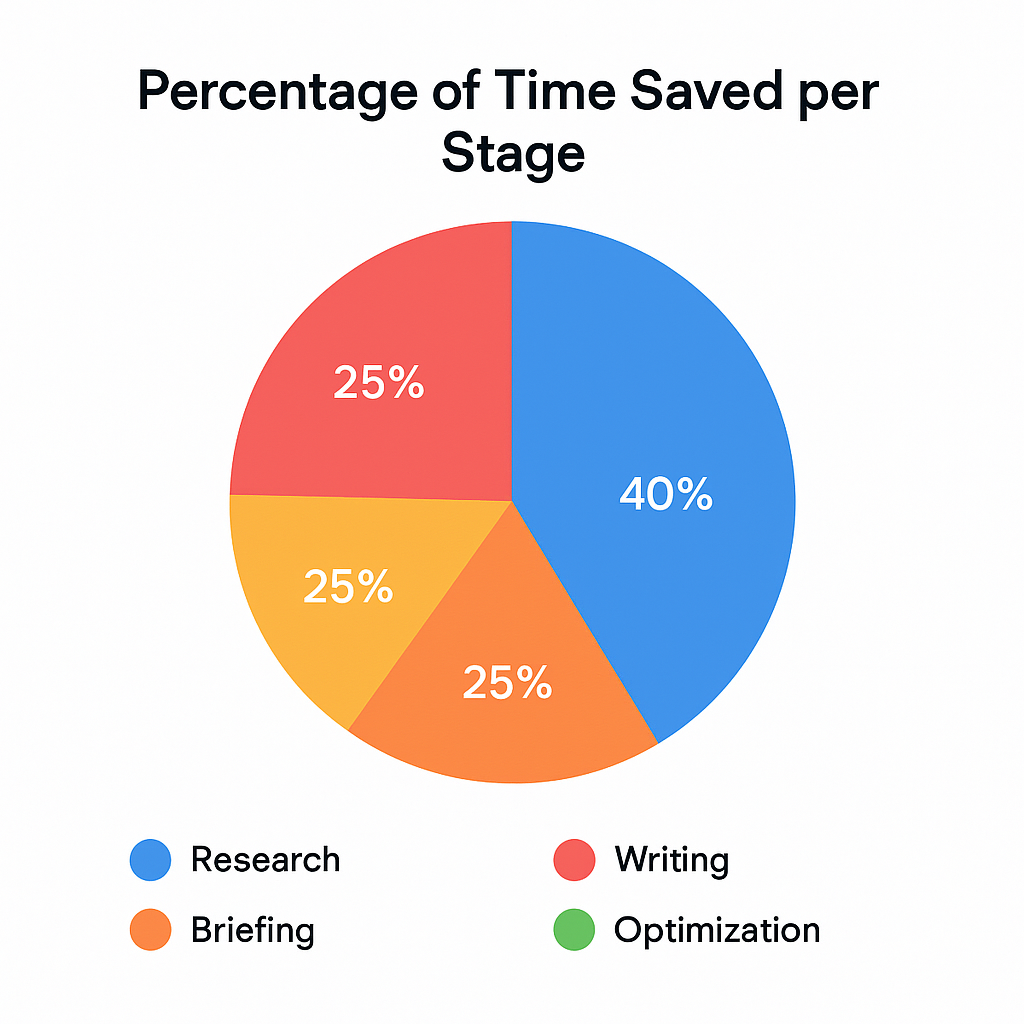
- Saves hours on research and briefing.
- Built-in writers reduce production time.
- Excellent for small teams or solo creators.
Cons
- AI drafts still require human editing for quality.
- Lacks some advanced NLP analysis found in premium tools.
Real-World Use Case
A marketing agency used Frase to create 150+ optimized articles in three months, a process that previously took six. As a result, their client’s blog traffic jumped by 122%, and average time-on-page increased by 48%.
Performance Stat
- 67% of marketers say Frase cut their content creation time in half.
Combine Frase’s AI brief generator with manual SERP inspection. The hybrid approach often leads to more comprehensive, authoritative content.
5. Gumloop – Automate SEO Workflows With AI Agents
Gumloop is one of the most exciting AI automation tools for SEO in 2025. It’s not a keyword research platform. It’s not a content optimizer. Instead, Gumloop is an AI workflow builder, a platform that lets you create custom agents to automate the boring, time-consuming SEO tasks that usually drain your team’s resources.
From internal link mapping to content outline generation and even schema markup suggestions, Gumloop may handle repetitive tasks so your team may focus on strategy and creativity.
Key Features
- AI Agent Builder – drag-and-drop interface to create SEO automations without code.
- SERP Monitoring Automations – automate rank tracking and competitor monitoring.
- Content Workflow Tools – auto-generate outlines, FAQs, and meta descriptions.
- Data Integrations – connect to Google Sheets, Notion, WordPress, and APIs.
- Workflow Analytics – track task execution, performance, and time saved.
Who It’s Best For
- SEO agencies managing large client portfolios.
- In-house teams automating high-volume tasks.
- Technical marketers building custom SEO tools.
Pros
- Drastically reduces manual work.
- Customizable workflows for advanced use cases.
- Seamless integrations with SEO stacks.
Cons
- Requires some setup to build effective workflows.
- More technical than traditional SEO tools.
Real-World Use Case
An enterprise e-commerce brand built a Gumloop automation to monitor 2,000+ product keywords weekly and update meta descriptions based on ranking shifts. This resulted in 61% faster content updates and a 35% boost in CTR from improved on-page optimization.
Performance Stat
- 42% of SEO teams say automation is their #1 productivity booster.
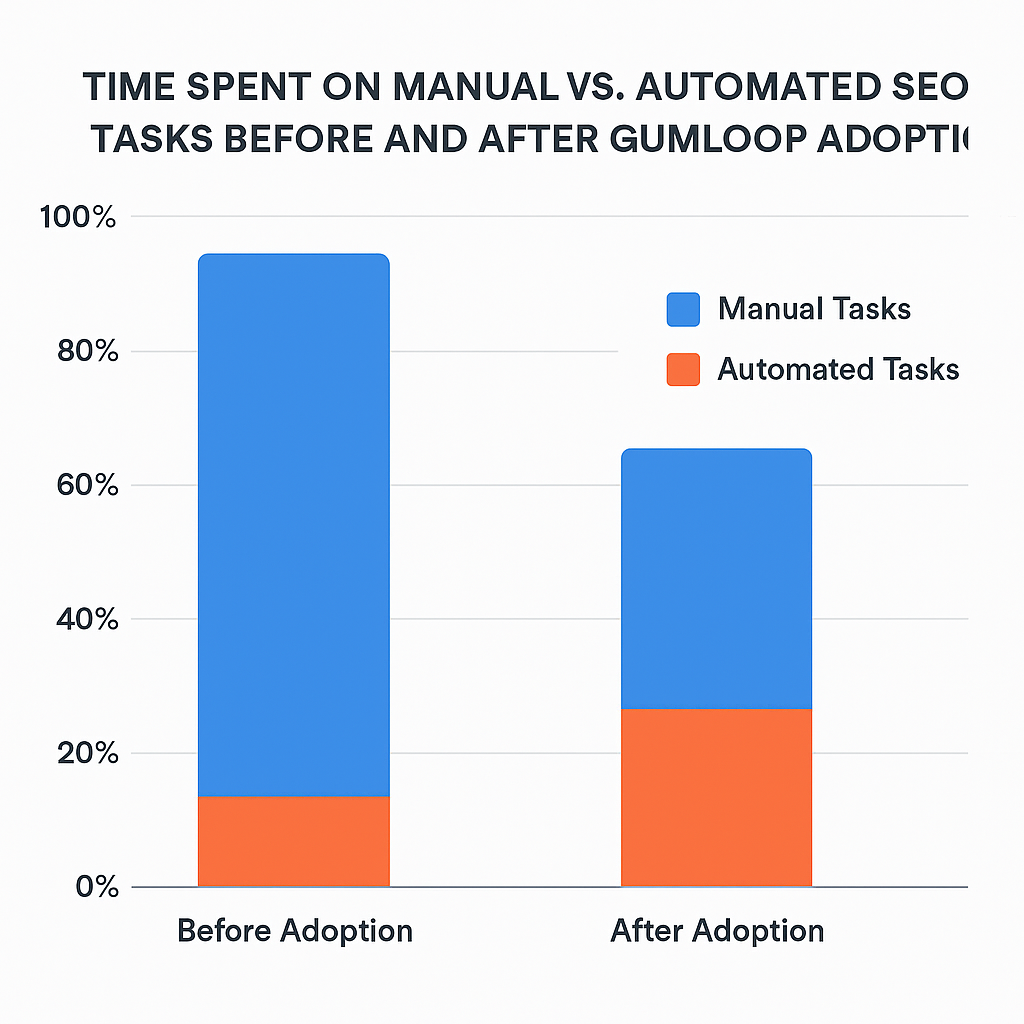
Use Gumloop to automate content refresh workflows. Schedule regular audits to identify outdated pages and auto-generate update suggestions.
6. AirOps – Automate and Scale Your SEO Content Pipeline
AirOps takes AI-powered SEO automation to the next level. Unlike many tools that focus on one part of the process (like writing or auditing), AirOps acts as a full-scale content pipeline manager. It automates everything from topic ideation to draft creation and internal linking.
Its biggest advantage is flexibility. AirOps lets you design workflows tailored to your content strategy, and then scale them effortlessly. For teams producing hundreds of pieces per month, this is a game-changer.
Key Features
- AI Workflow Templates – pre-built automations for research, briefs, and outlines.
- Content Drafting Tools – AI writer generates SEO-optimized copy in minutes.
- Performance Analytics – track engagement, CTR, and ranking improvements.
- Bulk Content Processing – automate hundreds of articles at once.
- Integrations – connect with CMS platforms, analytics tools, and CRMs.
Who It’s Best For
- Content agencies scaling high-volume production.
- SaaS and media brands managing large content hubs.
- Marketing teams building repeatable SEO processes.
Pros
- Handles the entire SEO content lifecycle.
- Huge time savings at scale.
- Excellent for large teams and enterprise use.
Cons
- Maybe overkill for smaller teams.
- Costs may scale quickly with high usage.
Real-World Use Case
A SaaS company used AirOps to generate and optimize 400+ blog posts in six months. This resulted in 211% growth in organic traffic and a 68% reduction in production costs compared to manual processes.
Performance Stat
- 71% of marketing leaders plan to automate more than half of their SEO workflows by 2026.
Combine AirOps with your analytics tool. Feed engagement data back into the workflow to continuously refine and improve your content strategy.
Future Trends in AI + SEO
The SEO landscape is evolving faster than ever.
In 2025, ranking on Google is only half the battle. The next era is about visibility across AI platforms, automation-first workflows, and entity-driven search.
Here’s what’s shaping the future, and how you may stay ahead.
1. From SEO to AEO – Optimizing for the Age of Answers
We’re entering a new era of Answer Engine Optimization (AEO).
Instead of just listing links, platforms like ChatGPT, Google Gemini, and Perplexity now deliver direct answers to users. This means your brand’s visibility depends less on traditional rankings, and more on how often your content is cited in AI-generated responses.
A recent Search Engine Journal report found that 43% of all queries are now answered by AI tools before a user clicks a single link. That number is expected to pass 50% by 2026.
So what does this mean for SEO?
It means you need to optimize for LLMs, not just search engines. That includes:
- Structuring your content with clear, factual answers.
- Adding schema markup to make it machine-readable.
- Targeting “question-style” keywords like how, why, and what is.
The goal isn’t just ranking, it’s appearing in the answers themselves.
2. Automation Everywhere – Scaling SEO With AI
The second big shift is automation is now at the heart of SEO.
AI tools are taking over time-consuming tasks that once required full teams from keyword clustering and topic ideation to technical audits, internal linking, and content refreshes.
According to Ahrefs’ 2025 AI SEO Study, automation adoption in SEO grew from 32% in 2023 to 71% in 2025. This means most successful SEO teams now use automated workflows as part of their core strategy.
AI Automation in SEO Tasks (% Adoption)
| Task | 2023 | 2025 |
| Keyword Clustering | 28% | 69% |
| Site Audits | 34% | 72% |
| Internal Linking | 19% | 61% |
| Content Updates | 22% | 88% |
This means that to compete in 2025 and beyond, your SEO operations must scale with AI. Manual processes simply can’t keep up.
3. Entity & Semantic Search – Meaning Over Keywords
Google and LLM-based platforms don’t just match keywords anymore, they interpret entities and semantic relationships.
In plain English, that means algorithms want to understand what your content is about and how it connects to broader topics. For example, if you write about “Apple,” they want to know whether you mean the tech company, the fruit, or the brand ecosystem.
This shift is why tools like Clearscope and Rankability are so powerful. They don’t just recommend keywords. Instead, they suggest related entities, NLP terms, and context to help you rank for semantic relevance.
Search engines are increasingly building knowledge graphs from entity data. If your content doesn’t map well to that graph, it risks being ignored no matter how well-optimized your keywords are.
The key is clear, focus on topic depth, context, and semantic coverage, not just keyword density.
4. AI Monitoring & Visibility Metrics – New KPIs for the New Era
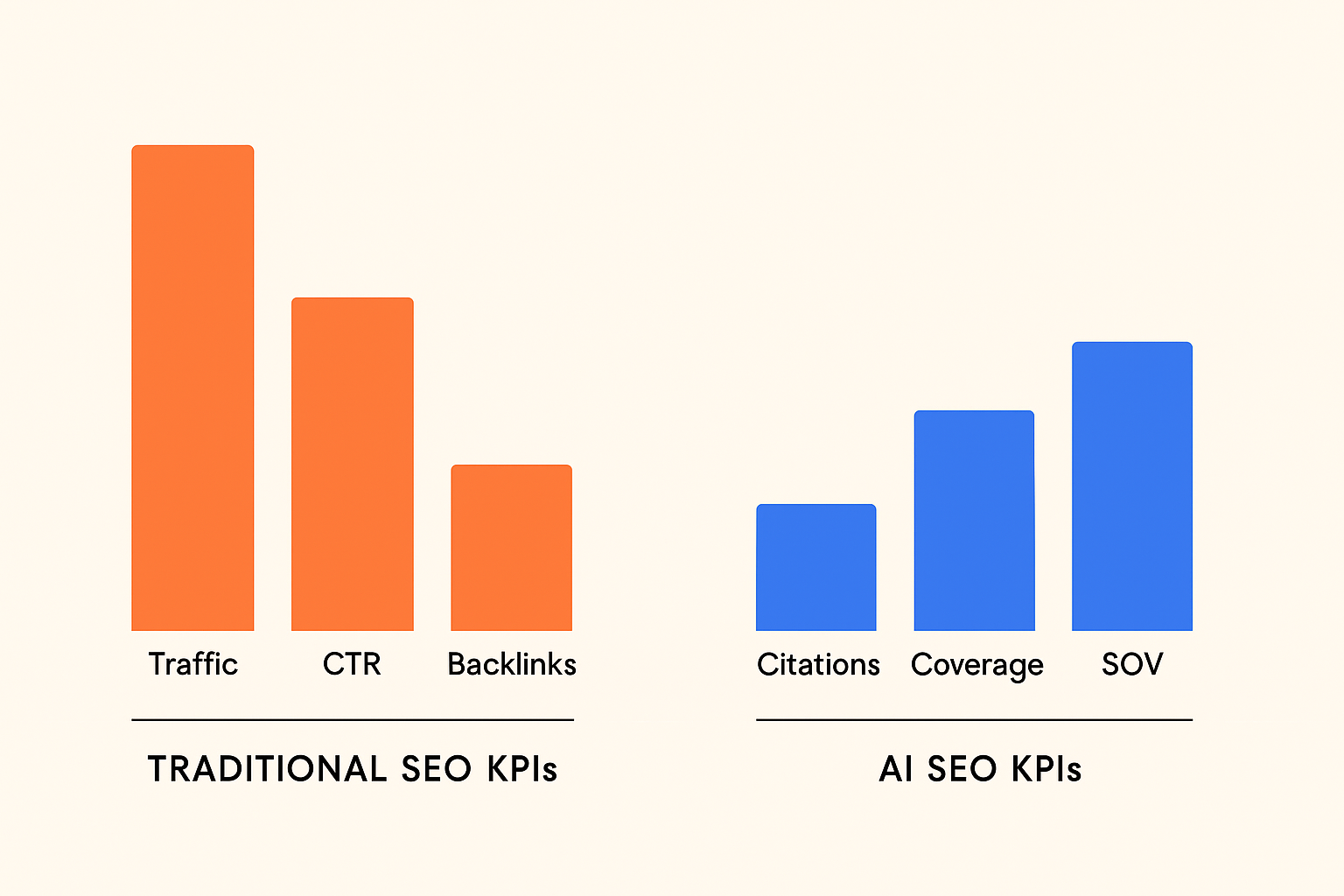
In traditional SEO, we measured success with rankings, clicks, and backlinks. But AI-driven search introduces a new set of KPIs.
The most forward-thinking SEO teams now track:
- AI Citation Frequency – how often LLMs reference your site in answers.
- LLM Coverage – the percentage of your content appearing in AI responses.
- Answer Share of Voice (SOV) – your brand’s presence in answer boxes and AI summaries.
A 2025 Content Marketing Institute survey found that 62% of enterprise SEO teams are already tracking AI-specific visibility metrics, and that number is climbing fast.
The brands that measure and optimize for AI visibility today will own the next decade of search.
SEO isn’t dying, it’s evolving.
The shift from search engines to answer engines, from manual work to automation, and from keywords to entities is already underway. However, the winners will be those who adapt early and build strategies for visibility in a world where AI is the new gateway to information.
FAQs
1. What is the best AI tool for SEO in 2025?
There’s no single “best” tool, it depends on your goals.
- For AI search visibility, choose Rank Prompt.
- For content optimization, go with Surfer AI or Clearscope.
- If you want to automate workflows, Gumloop and AirOps are unbeatable.
The most effective SEO strategies combine multiple tools across research, content, optimization, and analytics.
2. Will AI replace SEO experts?
No, and it’s not even close.
AI is transforming SEO, but it works with experts, not instead of them. Tools may automate tasks, suggest content structures, and analyze data, but they still need human strategy, creativity, and oversight.
Think of AI as a co-pilot: it accelerates results, but humans still steer the strategy.
3. How do I optimize for AI search and LLMs?
Optimizing for LLMs (Large Language Models) is called Answer Engine Optimization (AEO). Here’s how to do it:
- Focus on clear, factual answers to common questions.
- Use structured data and schema markup so machines understand your content.
- Create FAQ-rich, entity-focused content.
- Include citations, statistics, and authoritative links LLMs love reliable sources.
The more structured, relevant, and authoritative your content, the more likely it will appear in AI-generated answers.
4. Can AI really improve rankings?
Yes. Significantly.
A Content Marketing statistics found that 70% of marketers saw improved rankings after integrating AI tools into their workflow.
AI improves everything from keyword clustering and topic ideation to content optimization and internal linking, all of which boost your search performance.
However, it’s not a magic button. You’ll still need high-quality content, a strong site structure, and a solid link profile to reach the top.
5. How will SEO look like in the next 5 years?
Expect SEO to look very different by 2030.
Search will continue shifting from keyword-based results to AI-driven answers. AEO, entity optimization, and AI visibility metrics will become standard practice. Automation will dominate workflows, and content quality will be defined by depth, context, and authority rather than word count alone.
The brands that adapt early and start optimizing for AI today will be the ones dominating search tomorrow.
Recent Comments